Author: Chloe McClure, Images by: Mattea LinAe Photography
One of my favorite parts of planning weddings is building a day that truly reflects a couple, both individually and in the life they’re creating together. Some of my clients have incorporated their favorite movie theatre snack into passed hors d’oeuvres, included their pets in the ceremony, or designed color palettes inspired by their heritage. Every wedding should feel intentional and personal — a thoughtful reflection of who you are and what matters most.
For many couples, culture is at the heart of that story.
From food and music to ceremony rituals and attire, cultural traditions bring richness, depth, and meaning to a wedding celebration. They create connection, not just between partners, but between generations of family and friends gathered to witness the day.
Growing up in a Chilean family, I was immersed in Latin American traditions, music, and food from an early age. I attended many beautiful Latin weddings — some deeply rooted in religion, all deeply rooted in family. And that sense of family is truly the foundation of Latino wedding culture.
One of the most meaningful traditions in Latino weddings is the role of the Padrino (or Madrina). While “padrino” translates to “godfather,” in wedding tradition it means sponsor.
A Padrino is someone you deeply respect and honor, perhaps an uncle, grandparent, or close family friend. During the planning process, you may invite them to sponsor a specific element of your wedding, such as the music, cake, or rosary. If they accept, they cover the cost of that item and are honored during that celebration.
For example, a Padrino who sponsors the cake may present the couple with the knife and server before the cake cutting. Because of their significance, Padrinos are included in the processional, acknowledged in speeches, and participate in key moments throughout the day. It is also common to have multiple Padrinos, sponsoring different parts of the celebration.
It’s a beautiful way to involve loved ones in a meaningful, tangible way.
In Latino wedding culture, family is everything.
Children are always welcome — you’ll often see little ones coloring at tables or napping across chairs while lively music fills the room. The reception feels less like a formal event and more like a grand family gathering.
Couples often make their way around to greet tables personally, thanking guests for being there. Music plays continuously, dancing rarely stops, and the evening unfolds organically. Traditionally, cake is cut at midnight and served with coffee, and celebrations sometimes carry into breakfast the next morning for those who danced all night.
While modern venue timelines may shorten the festivities, the spirit remains the same: joy, movement, and togetherness.
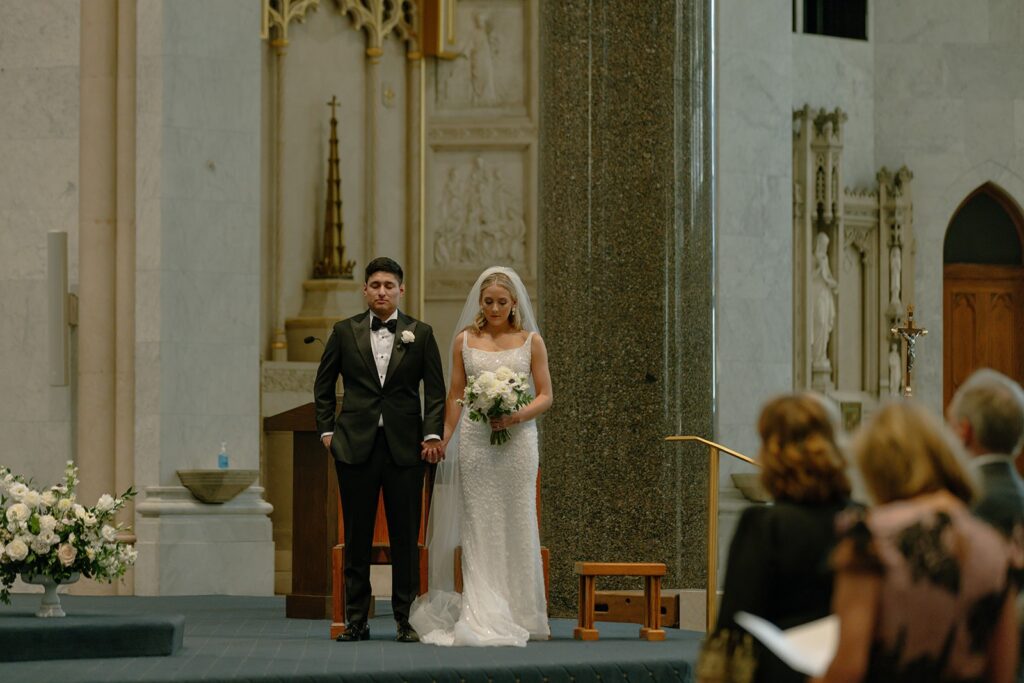
Many Latino ceremonies are rooted in Catholicism and may include a full Mass. Within the ceremony, there are several beautiful symbolic traditions couples may choose to incorporate:
- Las Arras (Coins): The groom presents the bride with a small box of coins, symbolizing his commitment to provide for her and their future together.
- El Lazo (Rosary or Lasso): A rosary or decorative cord is placed around the couple’s shoulders, representing their unity and lifelong bond in faith. A Padrino often sponsors and places the Lazo.
- Offering to Our Lady of Guadalupe: The couple may present flowers, asking for guidance and blessings in their marriage.
After the ceremony, one of the most joyful traditions is La Lluvia de Arroz — the “rain of rice.” Guests gather outside and shower the couple with rice, symbolizing prosperity and good fortune. It creates a celebratory transition into the reception.
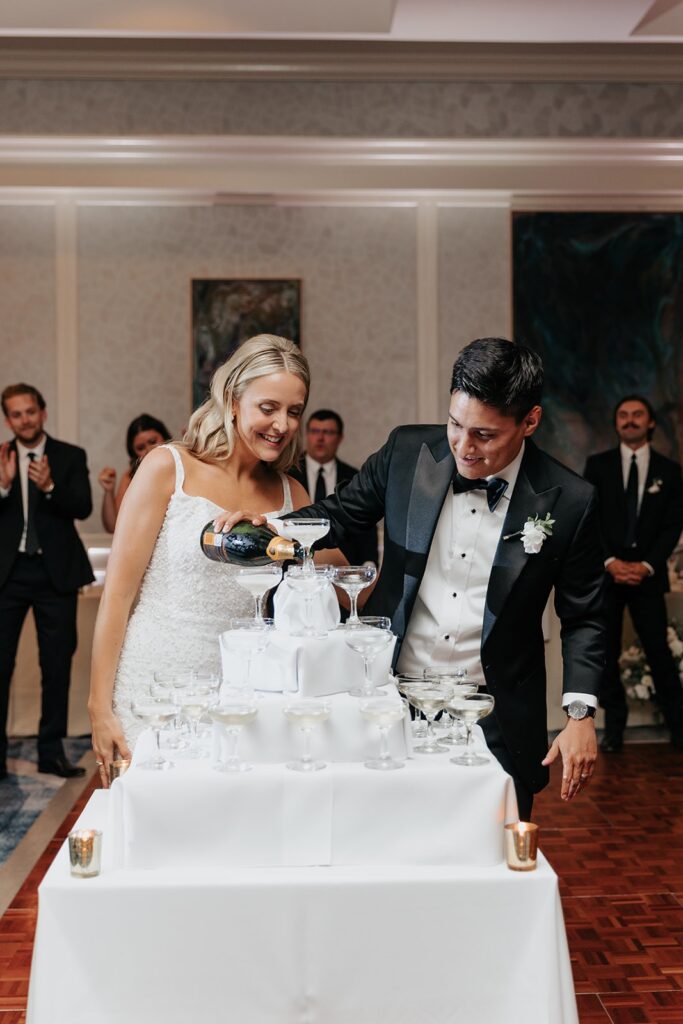
Latino weddings also bring fun and interactive twists to classic reception moments.
Instead of a traditional bouquet toss, ribbons are tucked into the wedding cake — one uniquely marked. Single women pull a ribbon, and whoever draws the marked one is said to be the next to marry.
For the men, instead of a garter toss, single guests place their shoes under the bride’s dress. The groom selects one at random — the owner is next to tie the knot.
These traditions add laughter and guest participation, keeping the energy high and the dance floor full.
Latin America is beautifully diverse, and traditions vary widely by country and region — it would be impossible to capture them all in one place. But the beauty of incorporating cultural traditions into your wedding lies in personalization.
You may choose to include one meaningful element or design your entire celebration around your heritage. Traditions evolve over time, and part of their magic is adapting them in a way that feels authentic to you. Weddings are most powerful when they feel intentional — when every detail carries meaning.
Whether you’re honoring your culture, blending two heritages, or simply inspired by these traditions, the opportunities are endless. And I would be honored to help you bring them to life in a way that feels timeless, personal, and uniquely yours.